
Zero Emissions, Maximum Thrills: Why Electric Water Karts Are the Future of Eco-Tourism
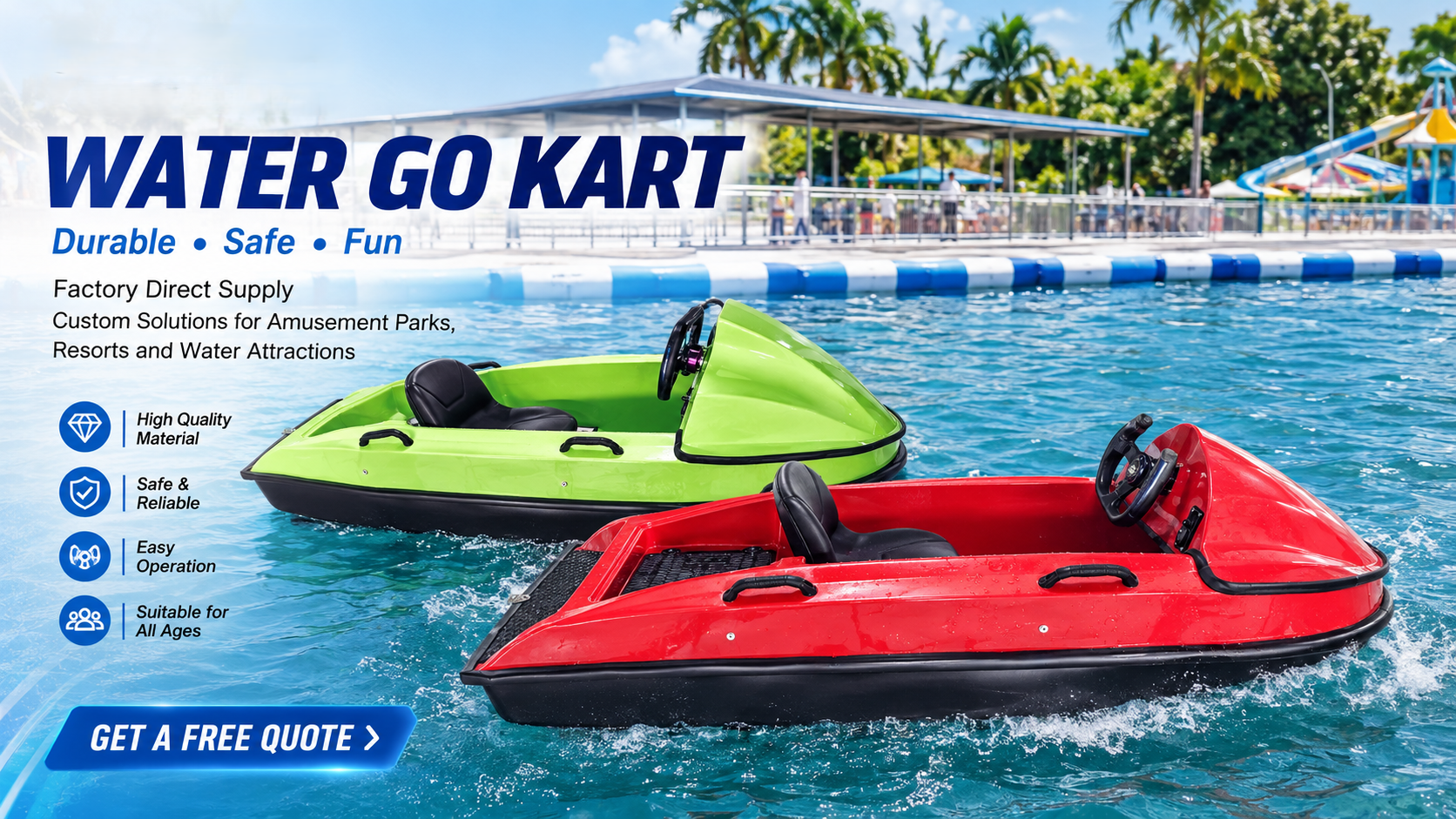
Environmental regulations are aggressively phasing out combustion jet skis across natural water reserves and eco-lakes worldwide. This article analyzes how pure-electric water go-karts deliver zero emissions, eliminate fluid leaks, and maintain whisper-quiet noise levels (<65 dBA). Learn how switching to electric propulsion cuts 3-year operating costs by over 70% while elevating luxury eco-resort guest experiences.
Worldwide, eco-tourism, sustainable hospitality, and green resort developments are experiencing unprecedented consumer demand. Today’s travelers actively choose destinations that prioritize environmental conservation, carbon reduction, and serene natural ecosystems.
However, waterfront hospitality faces a persistent paradox: Guests crave high-speed aquatic thrills, but traditional combustion watercraft destroy the very environment they come to enjoy.
Traditional combustion jet skis produce oil sheens on water, emit 85 to 105 dB of high-pitch noise, incur heavy fuel expenses ($15–$25/hour), and face widespread bans on protected water reserves. In contrast, electric aqua karts provide 100% zero fluid and exhaust emissions, run at an ultra-quiet sound level (<65 dB), operate at pennies per charge (~$1.00/hour), and fully comply with stringent ecological mandates.
From Lake Tahoe and Lake Annecy to protected marine sanctuaries across the Mediterranean and Southeast Asia, governmental bodies and environmental protection agencies are aggressively enacting bans on internal combustion marine engines. Operators investing in traditional combustion fleets face impending asset stranding, impossible environmental permitting for fuel docks, and severe liability for accidental fuel spills. Electric water go-karts eliminate these regulatory hurdles entirely, obtaining rapid municipal permitting across protected waters.
Beyond environmental compliance, pure electric propulsion delivers a staggering reduction in Total Cost of Ownership (TCO) compared to internal combustion engines.
Fuel vs. Electricity: A combustion jet ski consumes 12 to 20 liters of high-octane gasoline per hour ($18.00–$30.00/hr at marina prices), whereas a 15 kW electric kart consumes 3.5 to 5.0 kWh of power costing approximately $0.50 to $1.00/hr.
Maintenance Simplicity: Marine combustion engines operate with hundreds of moving components that suffer carbon buildup and corrosion. The Changfeng electric powertrain relies on a single moving part—the balanced rotor of our IP67 brushless motor—eliminating spark plug fouling, oil changes, and winterization procedures.
In luxury hospitality, tranquility is a premium commodity. Guests paying $500 to $1,500+ per night at an eco-resort will not tolerate the piercing whine of combustion engines echoing across the bay. Changfeng electric water go-karts operate under 65 dBA at full speed, allowing resorts to run high-energy racing attractions directly adjacent to overwater villas and beach dining terraces without noise complaints.
Electric motors produce 100% of their rated torque at 0 RPM. Delivering instant power to the marine impeller, the 15 kW motor propels the vessel from 0 to 45 km/h in under 3.2 seconds, reaching top speeds of 45 to 60 km/h with razor-sharp handling.
For remote island resorts and off-grid eco-lodges, supplying gasoline requires hazardous maritime fuel shipping. Electric water karts integrate seamlessly into solar microgrids, allowing floating docks with solar canopies to charge batteries during daylight hours and create a 100% solar-powered racing attraction.
Changfeng battery systems integrate an advanced active BMS and internal aluminum heat sinks to prevent thermal throttling in 40°C+ tropical environments. Furthermore, the ternary lithium chemistry is 98% recyclable and can be repurposed into secondary stationary solar storage after completing its 800+ cycle commercial lifespan.
Written by
Changfeng Kart Engineering Team
Senior Go-Kart Industry Consultants | 15+ Years Manufacturing Experience
Our engineering team has delivered 500+ go-kart projects across 50+ countries, specializing in commercial kart design, track engineering, and venue operations. Every article is reviewed by our technical directors to ensure accuracy and practical value for entertainment venue investors and operators.